
Diagnostic Testing for the Injured at Kinetix Physical Therapy
Physical therapists are now recognized as the practitioner of choice for evaluation and treatment of the human movement system, which by and large is comprised of the neurological, skeletal, muscular, and cardiopulmonary systems. As our professional autonomy has grown, so too has our scope of practice and deliverable services.
Diagnostic tests are used to help determine a diagnosis and implicate structures requiring intervention. Imaging studies are one example. Physical therapists use special clinical tests during our physical examination to aid in our evaluation and assessment of the patient’s symptoms. When combined with the patient history and overall presentation, these special clinical tests can be useful. However, in isolation, they may have poor diagnostic capacity. Physical therapists at Kinetix are undergoing extensive training to perform other diagnostic tests to improve patient management, ultimately leading to better outcomes, better patient satisfaction, and lower costs. The two most common diagnostic tests many of us are now performing are musculoskeletal ultrasound and electrodiagnostic studies.
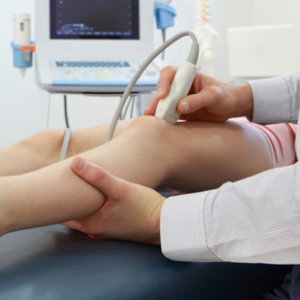
Musculoskeletal ultrasound (MSKUS) uses the same technology many people are familiar with in other contexts, such as cardiology or obstetric visits, but instead is used to specifically evaluate muscles, tendons, ligaments, joints, and nerves. MSKUS allows physical therapists to see the structures they are interested in and perform a dynamic assessment of their integrity. This is one benefit of MSKUS that is superior to magnetic resonance imaging (MRI) due to the fact that MSKUS can, and is often, used with movement, whereas the use of MRI requires there to be no movement during the study. While no imaging tool can see pain, a dynamic assessment often does allow us to be more accurate in determining the cause of someone’s pain or what may not be causing their pain. For example, someone may have shoulder pain and get an MRI that shows a tear in their rotator cuff which then they believe is the source of their pain. However, many individuals have rotator cuff tears but do not have pain. By specifically observing these tendons and testing these muscles under MSKUS imaging, we can determine what structures are actually involved and causing pain in real-time. MSKUS is also typically much less costly for patients to receive compared to MRI, takes less time, and can be used even when someone may not be able to have an MRI, such as if they have a pacemaker. This is not to say MRI studies are still not valuable tools and should continue to be utilized as they do allow for greater visualization of deeper structures and are widely still considered the gold standard for imaging studies. This is especially true for the spine where MSKUS is not an appropriate tool.
The other most common diagnostic study we are now performing are electrodiagnostic studies which are comprised of the combination of two tests, usually performed together: nerve conduction studies (NCS) and electromyography (EMG). NCS involves the recording of electrical signals that are transmitted to and from the brain by your nerves. The body has sensory nerves that transmit signals from your body to your brain about things such as temperature or pressure, and it has motor nerves which carry signals from your brain to your muscles allowing you to move your skeleton. EMG uses a tiny little pin to observe and record this electrical activity within your muscles. When you experience pain, numbness/tingling, or weakness, this test can help us determine an accurate diagnosis with the location, severity, and extent of the problem and even if it’s healing. This is commonly used in evaluating for compressive neuropathies such as carpal tunnel syndrome, radiculopathies or “pinched nerves” in the neck and back, and other nerve injuries from accidents.
Dr. Scott Eddins, PT, DPT
Doctor of Physical Therapy and Clinical Director
scotte@kinetixpt.com